

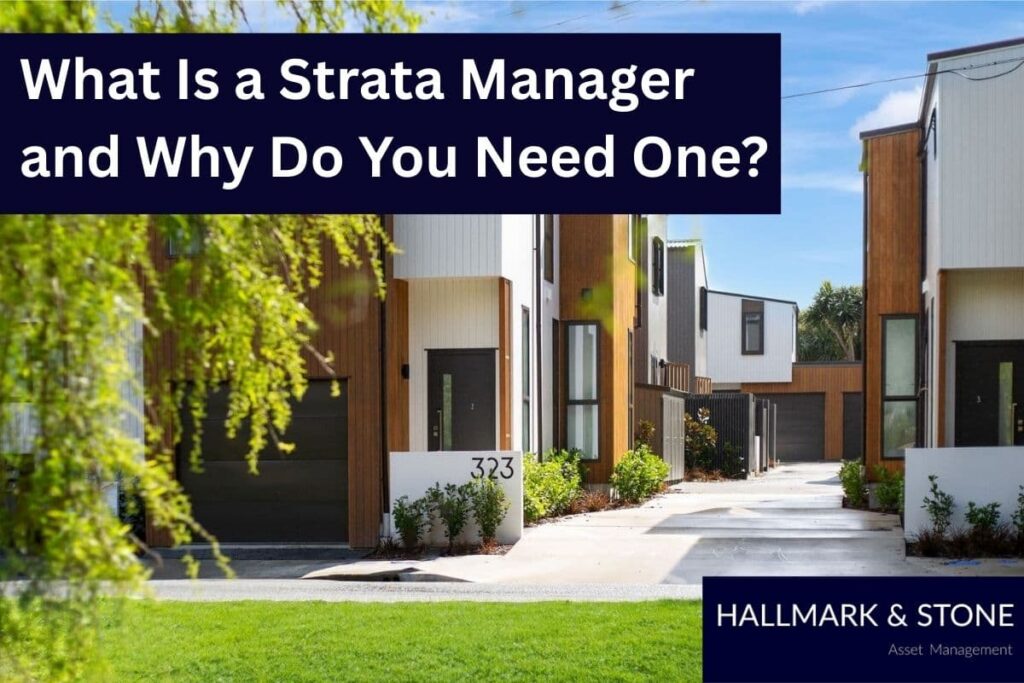
A strata manager is the specialist who runs the day-to-day governance, finances, maintenance and compliance for unit title and body corporate developments on behalf of all owners collectively. For a Body Corporate with 30–100+ unit schemes, a strong strata manager is essential to move from reactive fixes to long-term, data-backed stewardship that protects value, reduces risk and makes committee reporting easier.
Table of Contents
Introduction – why the strata manager question matters
If you manage several apartment or multi-unit complexes, you are probably asked the same questions repeatedly: What does a strata manager actually do, and do we really need one for our building? In a world where levies are under pressure, and buildings are ageing, some owners wonder if a committee could simply “self-manage” to save money, while others have only experienced basic admin support and are unsure what good body corporate management even looks like.
New Zealand’s Unit Titles Act 2010 and its 2022 amendments have sharpened expectations around governance, disclosure and compliance for unit title schemes, which means the quality of your strata manager now has a direct impact on legal risk, insurance and long-term asset performance. This post explains what a strata manager is, why they matter, and how body corporates can use the role to deliver better outcomes for owners and residents.
What is a strata manager?
In New Zealand, a strata manager (often called a body corporate manager) is a professional engaged by the body corporate to deliver the operational, financial and compliance functions required under the Unit Titles Act and related regulations. Owners of a unit title development automatically form the body corporate, which can then elect a committee and appoint a strata manager to handle the practical work of running the scheme.
As Hallmark & Stone’s own explainer on What is Strata Management and How Does It Work points out, the strata manager acts under the direction of the body corporate committee but is responsible for the day-to-day tasks that keep shared property compliant, well-maintained and financially sound. Their role sits at the intersection of governance, finance, facilities management and regulatory compliance.
Why strata managers are essential for shared properties
Shared properties introduce complexity that does not exist in standalone homes. You have multiple owners, shared infrastructure and a legal entity that must comply with legislation and its own rules. Strata managers exist because coordinating all of that effectively is a full-time, specialist job.
Key reasons they are essential include:
- Governance and decision making – they prepare agendas, convene AGMs and committee meetings, document resolutions, and ensure decisions are implemented, which helps the body corporate meet its legal governance obligations.
- Financial stewardship – they prepare budgets, forecast expenses, issue levies, manage arrears, and keep transparent financial statements and long-term maintenance funds, which is critical for levy planning and capital works.
- Maintenance and common property care – they coordinate repairs and preventative maintenance across roofs, exteriors, lifts, car parks and other shared areas so the building remains safe, functional and attractive.
- Compliance and risk management – they help ensure the scheme complies with the Unit Titles Act, Building Act requirements such as BWOF, and health and safety, fire and seismic obligations, and that records are kept to prove it.
- Dispute resolution and community relations – they mediate between owners and residents, enforce operational rules and resolve issues such as noise, parking or renovation disputes before they escalate.
For a Body Corporate with 6–10 complexes, the strata manager is the operational engine that makes it possible to juggle competing priorities without constant crisis management.
Do you really need a strata manager?
Technically, some very small schemes can self-manage. The Strata Community Association notes that in some cases, owners manage finances, maintenance and administration themselves. However, even SCA NZ advises that most bodies corporate prefer to use a professional strata manager because the work is complex and time-consuming, and the consequences of getting it wrong can be serious.
For a Body Corporate Manager working with medium to large developments across Wellington and Lower Hutt, several realities make professional strata management effectively non-negotiable:
- Increasing legislative complexity – Unit Titles Act amendments, health and safety expectations and evolving building regulations mean committees need access to specialist knowledge, not DIY interpretations.
- Ageing building stock and capital works – many complexes now require seismic work, cladding remediation or major CAPEX. Coordinating this without professional support can overwhelm volunteer committees.
- Insurance and risk – premium increases and stricter underwriting for multi-unit and Wellington properties make proactive risk management and good documentation essential.
- Owner expectations – owners increasingly expect professional reporting, clear communication and robust planning, which is hard to deliver with volunteer efforts alone.
So, while a tiny three‑unit townhouse scheme might scrape by without one, for most shared properties, a strata manager is less a luxury and more a core part of responsible governance.
How strata managers add value to your property
Strata managers do more than keep the lights on; they influence the long-term financial and physical performance of your building.
Ways they add value:
- Preserving and enhancing asset value – by planning maintenance, coordinating timely repairs and supporting long term maintenance plans, they help avoid deterioration and protect market values for every unit.
- Reducing reactive maintenance and surprise costs – good managers promote preventative maintenance and develop 10‑year plans, which Hallmark & Stone highlight as a key step in reducing major repairs by up to 40 per cent in some case studies.
- Improving compliance and reducing legal risk – they keep BWOF, safety schedules, health and safety registers and regulatory updates in order, reducing the chance of fines, enforcement action or insurance disputes.
- Supporting better levy decisions – with clear budgets, risk assessments and capex forecasts, strata managers give the body corporate committee‑ready information to explain and justify levies, easing owner tensions.
- Freeing up committee and manager time – by handling administration, contractor management and day-to-day communication, they allow committees to focus on strategy instead of logistics.
Hallmark & Stone explicitly differentiate themselves by integrating dedicated facilities management alongside strata management, so each building has both governance support and hands‑on asset expertise, something many competitors do not provide. That combined model directly addresses pain points like ageing infrastructure, rising insurance and lifecycle planning for roofs, lifts and HVAC.
How to choose the right strata manager
Given how central the role is, choosing a strata or body corporate manager requires more than comparing fees.
For a Body Corporate Manager, key steps include:
- Clarify your needs and pain points
Map the size, age and complexity of each building. List issues such as capital works, seismic risk, owner disputes or complex insurance. This will shape the level of governance and facilities integration you require. - Assess track record and accreditation
Look for managers with proven experience in similar multi-unit schemes and membership of organisations such as the Strata Community Association NZ. Review their understanding of the Unit Titles Act, recent amendments and body corporate governance responsibilities. - Evaluate governance, financial and compliance capability
Ask for sample AGM agendas, minutes, financial statements and long-term maintenance plans. Hallmark & Stone’s own content sets out governance, budgeting and maintenance as core competencies for their managers. Confirm how they handle BWOF, safety schedules (SS1–SS14), health and safety and insurance placement. - Check communication and reporting style
As MRI notes, effective strata committee management relies on clear communication and expectations. Ensure their reports are concise, visual and “committee-ready” so you can present them easily to owners and stakeholders. - Understand fee structure and value
Refer back to guidance on How Much Does Strata Management Cost to compare fee models and inclusions. Focus on total value and risk reduction rather than headline price alone. - Test cultural fit and responsiveness
Meet with prospective managers, ask scenario-based questions about disputes, major leaks or insurance claims and see how they respond. Your strata manager will be the voice of the body corporate in many conversations, so trust and alignment are critical.
Conclusion
A strata manager is not just an administrator; they are a governance advisor, financial steward, maintenance coordinator and compliance specialist acting on behalf of all owners in a unit title development. For a Body Corporate charged with supporting capital growth, building performance and lifecycle planning across multiple properties, an effective strata manager is essential to move from reactive fixes to resilient, data-driven asset management.
By understanding what strata managers do, why they are necessary and how to select the right one, you can help your committees future proof their buildings, reduce conflict and make better long-term decisions for every owner in the scheme.
Frequently asked questions
Are strata managers licensed?
In New Zealand, strata and body corporate managers are not licensed in the same way as real estate agents, but their role is defined and regulated through the Unit Titles Act 2010 and its amendments, which require written management agreements and adherence to a prescribed code of conduct. Many professional managers also belong to Strata Community Association NZ, which sets additional standards and provides education and best practice frameworks.
What should I expect from a good strata manager?
You should expect a good strata manager to provide strong governance support, including well-run AGMs and clear records, robust financial management and transparent budgeting, proactive maintenance coordination and long-term planning, and reliable compliance oversight for BWOF, health and safety and Unit Titles requirements. They should communicate clearly with committees, owners and residents, provide concise reports and act as a trusted advisor on risk, insurance and capital works, not just as a levy processor.
What types of properties need a strata manager?
Any development registered under the Unit Titles Act or similar strata or body corporate structure can benefit from a strata manager, including apartment buildings, townhouse complexes, mixed-use residential and commercial schemes and large multi-tower developments. Smaller schemes may occasionally self-manage, but as SCA NZ notes, most bodies corporate choose a professional manager because legal, financial and maintenance obligations are complex and mistakes can be costly.
